

The medical spa industry reached $19 billion in the United States in 2025 and is projected to exceed $28 billion by 2030. That growth means opportunity, but it also means that opening a med spa today means entering a market that is substantially more competitive than it was five years ago. In most mid-size US cities, patients can choose from a dozen or more med spas within a short drive. In major metros, the options are overwhelming.
Winning in that environment is not about having the best injector - though that matters. It is about being the most visible, most trusted, and most top-of-mind option in your market when a patient decides they want a treatment. This guide covers the complete marketing playbook for medical spas in 2026: what channels to prioritize, how to build the visual brand that earns patient trust, and how to convert interest into booked appointments consistently.
Why Med Spa Marketing Is Different From General Healthcare Marketing
Medical spa patients are not sick. They are choosing to spend discretionary cash on a service they want, not one they need. That distinction changes almost everything about how you market to them. Healthcare marketing for medical conditions is built around trust, clinical credibility, and addressing patient anxiety. Medical spa marketing is built around aspiration, visual results, social proof, and the feeling that your practice is the right environment for someone who takes their appearance and self-confidence seriously.
The other critical difference is the competitive frame. A patient choosing a cardiologist is unlikely to comparison-shop extensively on price. A patient choosing where to get their Botox will absolutely compare prices, check multiple Instagram accounts, read dozens of reviews, and evaluate the aesthetic of each practice's physical space before picking up the phone. Med spa marketing must address all of these decision points.
Additionally, med spas straddle the line between healthcare and beauty. The presence of a medical director and licensed practitioners is a compliance requirement and a trust signal, but patients often encounter your brand first through channels more associated with beauty brands than medical practices: Instagram, influencer partnerships, referral programs, and seasonal promotions. A successful med spa marketing strategy borrows the best of both worlds.
Building Your Visual Brand: The Foundation of Med Spa Marketing
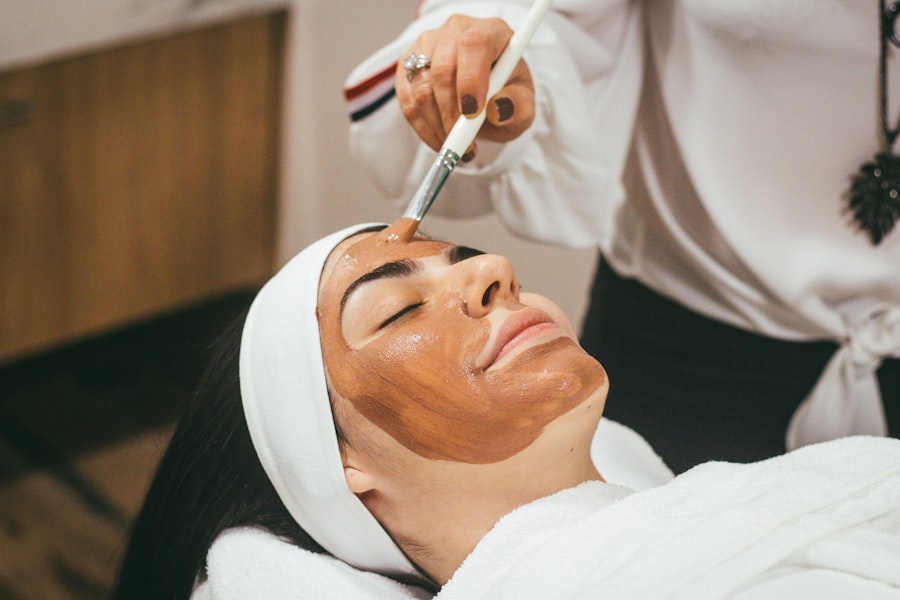
In medical spa marketing, visual brand is not a nice-to-have. It is the primary mechanism through which patients evaluate whether your practice is the right fit for them. Before a prospective patient reads a single word on your website or reviews page, they have already formed an impression based on your photography, your Instagram aesthetic, your logo, and the visual language of your space. That impression either creates desire or creates doubt.
The med spas that consistently win on visual brand share several characteristics. Their photography is professional, consistently lit, and focused on real results from their actual patients (with consent). Their brand color palette and fonts are consistent across every touchpoint - Instagram, website, reception area, email communications, and appointment confirmation texts. The physical space is designed to be photographed, which means patients do some of your marketing for you every time they share a photo on their own social accounts from your waiting room or treatment suite.
Invest in a professional brand photographer and a one-day shoot to build a library of high-quality images of your space, your team, and your treatments. This library will power your social media, website, Google Business Profile, and email marketing for months. Refreshing with new content quarterly keeps your visual presence feeling current. The ROI on professional photography in medical spa marketing is among the highest of any single investment you can make.
Before and After Content Strategy
Before and after photography is the most persuasive content format in aesthetic medicine. Patients want to see real results from real people, preferably people who look like them. A thoughtfully built before and after library - organized by treatment, body area, and patient type - serves as a visual portfolio that closes the gap between "I'm interested" and "I'm booking."
Build your before and after system from day one. Every consult and treatment should include a standard consent process for photography. Use consistent lighting, backgrounds, and camera positioning so comparisons are meaningful and professional. Organize images by treatment category so patients can easily find results relevant to their specific concern. On your website, a searchable gallery organized by treatment converts far better than a general "results" page with unsorted images.
On organic social media, before and after content consistently outperforms all other formats for engagement and saves - both signals that matter for Instagram's algorithm. The constraint is that Meta does not allow before and after images in paid ad campaigns. Your organic presence builds the library; paid ads use other creative formats to drive traffic toward that content.
Instagram Strategy for Medical Spas
Instagram remains the dominant social platform for medical spa patient acquisition and brand building. No other channel offers the combination of visual storytelling, local discovery, before and after content, and the ability to reach patients who are in the early stages of considering aesthetic treatments. A well-run Instagram account is the most powerful free marketing asset a med spa has.
The content mix that performs consistently for medical spas includes:
- Before and after Reels and carousels - the highest-engagement format. Use text overlays to name the treatment and the number of sessions. Reels with transformation reveals consistently get 3 to 5 times the reach of static posts.
- Educational content - "What is the difference between Botox and Dysport?" "How long does filler last?" "What to expect after a laser treatment?" These posts attract patients in the research phase and establish your practitioners as knowledgeable and approachable.
- Behind-the-scenes content - treatment preparation, your team at work, and your space create a sense of warmth and transparency that reduces appointment anxiety for first-time patients.
- Patient testimonials on camera - short video testimonials from consenting patients, filmed with their permission, provide social proof in a format that is significantly more persuasive than text reviews.
- Seasonal and promotional content - treatment packages, member specials, and event announcements drive immediate bookings from patients who are already in your audience.
Post consistently - three to five times per week is the sweet spot for most med spas that have the content to support it. Story activity should be daily, even if it is just a simple question box, poll, or patient countdown timer. Stories keep your account top of mind for followers between feed posts.

Instagram Paid Ads for Med Spas
Paid Instagram and Facebook ads are highly effective for medical spa patient acquisition when structured correctly. The constraint most med spas encounter is Meta's advertising policy, which prohibits before and after images in paid ad creative and restricts certain medical claims. The workaround is straightforward: run paid ads that focus on the experience, the environment, and the feeling of confidence your treatments produce, rather than direct results imagery.
The most effective paid ad formats for med spas are short Reels (15 to 30 seconds) that show the treatment environment, a practitioner consultation, and a satisfied patient - without explicit before and after framing. Video ads with text overlays naming specific treatments ("Lip filler starts at $550," "Free Botox consult this month") and a clear CTA button to book outperform static image ads consistently. Lead generation ads that let patients request a free consultation without leaving Instagram convert at significantly higher rates than ads that drive traffic to a landing page.
Target your ads by geography (within 10 to 15 miles of your location), age and gender demographics that match your patient base, and interest-based audiences including beauty, skincare, and self-care. Lookalike audiences built from your existing patient email list will be your highest-converting audience once you have enough data - typically 1,000 or more contacts. Retargeting audiences - people who have visited your website or engaged with your Instagram account - convert at 3 to 4 times the rate of cold audiences.
Google Ads for Medical Spas
Google Search Ads capture patients who are actively searching for specific treatments in your area. Unlike Instagram, which reaches patients who are passively browsing and may not yet be thinking about treatments, Google reaches patients who are typing "Botox near me," "best med spa in [city]," or "lip filler [city]." That intent makes Google Search the highest-converting paid channel for most medical spas, even though it typically costs more per click than social media ads.
Structure your Google Ads campaigns by treatment category: one campaign for injectables (Botox, Dysport, fillers), one for body contouring (CoolSculpting, Emsculpt, etc.), one for skin treatments (laser, chemical peels, microneedling), and so on. This structure allows you to control bids by profitability, write ads that speak directly to the specific treatment the patient searched for, and send them to a landing page optimized for that treatment's specific value proposition.
The keywords that perform best for med spas are:
- Treatment + city: "Botox [city]," "lip filler [city]," "laser hair removal [city]"
- Intent modifiers: "Botox near me," "best med spa near me," "Botox consultation"
- Price-adjacent: "Botox cost [city]," "how much does filler cost," "med spa specials [city]"
- Competitor brand terms (with caution): bidding on competitor names is legal but requires careful ad copywriting
Med spa Google Ads must comply with Google's healthcare advertising policies. Claims must be accurate and substantiated. You cannot make guarantees about results. Certain categories of treatment may require Google certification or additional approval. Work with a healthcare marketing specialist when setting up campaigns to avoid account suspensions that can take weeks to resolve.
Local SEO for Medical Spas
Organic search is a long-term investment that pays compounding returns for medical spas. Patients who find you through organic Google results convert at high rates because they were actively searching for what you offer. Unlike paid ads, which stop generating patients the moment you stop paying, a well-executed SEO program continues to drive bookings month after month without incremental cost.
The most important local SEO priorities for med spas are: a fully optimized Google Business Profile, treatment-specific service pages on your website, consistent NAP (name, address, phone) citations across directories, and a steady flow of new Google reviews. These four elements, maintained consistently, are enough to outrank most local competitors in organic search within six to twelve months.
For treatment-specific SEO, each major service you offer deserves its own dedicated page: a Botox page, a filler page, a laser page, a body contouring page. Each page should be at least 800 words, include FAQs that answer common patient questions, have clear before and after imagery (with consent), and include a prominent booking CTA. These pages capture patients who search for specific treatments rather than generic "med spa near me" queries, and they convert at higher rates because the patient has already self-selected their interest.
Google Business Profile Optimization for Med Spas
Your Google Business Profile is often the first place a prospective patient evaluates your med spa. An incomplete or poorly maintained profile will lose patients to competitors with just 30 minutes of additional attention to their listing. The most important elements to optimize are: your business name and category (use "Medical Spa" as primary category), your service menu (list every treatment individually - Google uses these for search matching), your photos (upload at least 20 high-quality images including your space, team, and treatment rooms), your description (highlight what makes your practice distinctive), and your review response rate.
Post to your Google Business Profile weekly. Google Posts that promote seasonal specials, new treatments, and upcoming events appear directly in your search listing and give potential patients a reason to click through to your website. A med spa that posts regularly signals to Google that it is an active business, which positively influences local ranking.
Review Generation: The Highest-ROI Marketing Activity for Med Spas
Patient reviews are the most influential factor in the med spa purchase decision. A 2025 survey found that 87% of patients read online reviews before choosing an aesthetic provider, and more than half say they will not visit a business with fewer than four stars. For medical spas specifically, where treatments are elective and patients are spending significant money on results they care deeply about, reviews carry even more weight than in general healthcare.
The practices that build the strongest review profiles do not rely on patients to volunteer reviews spontaneously. They have a systematic process: every patient who completes a treatment receives a follow-up text or email 24 to 48 hours after their appointment asking for feedback. Patients who report high satisfaction are directed to Google or Yelp with a direct review link. Patients who report any dissatisfaction are routed to a private response pathway so the practice can address the issue before it becomes a public negative review.
Respond to every Google review, positive and negative, within 24 hours. For positive reviews, a warm, specific acknowledgment reinforces the relationship. For negative reviews, a calm, professional response that acknowledges the concern and offers to resolve it privately demonstrates to prospective patients reading the reviews that you take patient experience seriously. A practice with 300 reviews, one or two of which are negative but responded to professionally, reads as more trustworthy than a practice with 30 perfect reviews and no engagement.
HIPAA compliance applies to your review responses. Never acknowledge that the reviewer is a patient, never reference specific treatments they received, and never share any health information in a public response. Responses to negative reviews should be general: "We are sorry to hear your experience did not meet your expectations. Please reach out to us directly at [phone/email] so we can make this right."
Influencer and UGC Marketing for Med Spas
Influencer partnerships are one of the most effective acquisition channels available to med spas, because the trust dynamic in aesthetic medicine is highly social. Patients are heavily influenced by seeing real people they follow - particularly local influencers with audiences that overlap with your patient demographic - share their genuine treatment results and experiences.
Micro-influencers (5,000 to 50,000 followers) in your local market almost always outperform macro-influencers for med spa acquisition. A local influencer with 12,000 followers in your city has an audience that is geographically relevant, trusts their recommendations because of their perceived authenticity, and is more likely to actually convert into patients than followers of a national influencer who may live thousands of miles away.
Structure influencer partnerships as service-for-content exchanges rather than cash payments for most local micro-influencers. Provide complimentary or discounted treatments in exchange for an agreed number of posts, Stories, and Reels with specific tagging requirements. Require that posts be disclosed as gifted or sponsored in compliance with FTC guidelines. The best influencer partnerships feel authentic because the influencer genuinely liked their results - forced or uncomfortable endorsements are obvious to audiences and damage rather than build your brand.
User-generated content (UGC) - photos and videos that your actual patients create and post about their experience at your spa - is among the most credible marketing content you can have. Build a culture that encourages patient sharing: create an Instagram-worthy space, have a branded mirror or backdrop patients can use for selfies, train your team to ask satisfied patients if they would be willing to tag your account in any photos they share. Then actively repost that content (with permission) across your own channels. UGC signals to prospective patients that real people are genuinely happy with your work.
Email and SMS Marketing for Patient Retention and Reactivation
A first-time med spa patient has a lifetime value that is 5 to 10 times their initial appointment, if you retain them. Most of the margin in medical spa marketing is not in acquiring new patients - it is in keeping the patients you have already converted. Email and SMS are the highest-ROI channels for patient retention and reactivation.
Build your patient contact list from day one and segment it by treatment history. A patient who has received Botox every three months for two years is a different communication target than someone who came in once six months ago for a facial. Personalized email campaigns that acknowledge treatment history and offer relevant next-step recommendations convert at dramatically higher rates than generic newsletters sent to your entire list.
The highest-performing email campaigns for med spas are:
- Reactivation sequences - targeting patients who have not visited in 90, 120, or 180 days with a personalized offer relevant to their last treatment
- Seasonal promotions - summer body contouring campaigns, fall skin renewal, holiday gift packages, and New Year treatment specials all perform well because they have a clear urgency component
- Treatment milestone prompts - "It has been about 3 months since your Botox appointment. Ready for your touch-up?" automatically timed to each patient's typical treatment cycle
- New treatment announcements - when you add a new service, your existing patient base is your highest-converting audience because they already trust your practice
- Member or loyalty program updates - if you have a membership program, regular email communication about member benefits and exclusive offers reinforces the value of membership
SMS marketing converts at significantly higher rates than email for appointment reminders and time-sensitive offers, because open rates for text messages are above 90% compared to 20 to 30% for email. Use SMS for appointment confirmations, day-before reminders, and flash promotions with short expiration windows. Always obtain explicit opt-in consent for SMS communications and make it easy to unsubscribe.
Membership Programs: The Growth Lever Most Med Spas Underuse
A membership or loyalty program is one of the most effective tools for increasing patient lifetime value and creating predictable recurring revenue for a medical spa. Patients enrolled in a membership visit more frequently, spend more per visit, refer more often, and have substantially lower churn rates than non-members. A well-designed membership program can increase average patient lifetime value by 40 to 60%.
The most common structure is a monthly subscription that includes a set number of units, a percentage discount on treatments, and priority booking access. Pricing the membership at a slight discount to normal rates - enough to feel like real value, not enough to compress your margins significantly - with the benefit of predictable monthly revenue is the sweet spot most successful med spas land on.
Market your membership program at the point of greatest patient satisfaction: immediately after a positive treatment outcome. A patient who just saw impressive filler results is in exactly the right emotional state to commit to a membership that keeps those results maintained. Train your practitioners and front desk team to present membership options at the right moment in the patient journey, with clear, specific framing of the financial benefit: "Based on how often you're already visiting, our membership would save you about $300 per year."
Website Conversion Optimization for Med Spas
Your website is where patients go after discovering you on Instagram, Google, or through a referral to make the final decision about whether to book. A med spa website that is visually impressive but does not convert is a significant revenue leak. The conversion elements that matter most are: a prominent, frictionless online booking button above the fold, before and after galleries organized by treatment, practitioner bios with photos that convey warmth and expertise, and social proof (review counts and rating) visible without scrolling.
Mobile optimization is non-negotiable. More than 70% of med spa website traffic arrives via mobile devices, and a site that is slow to load or difficult to navigate on a phone will lose a substantial portion of visitors before they ever see your booking form. Test your mobile experience regularly and prioritize load speed - every additional second of load time increases abandonment rates measurably.
Online booking reduces the friction between interest and appointment by eliminating the need for a phone call during business hours. Most patients who are ready to book do not want to call and wait on hold. They want to open your site at 9pm, pick a time that works, and receive a confirmation immediately. Practices that add online booking consistently report a 20 to 30% increase in new patient appointments, with no additional marketing spend.
Tracking What Works: Marketing Metrics for Med Spas
Medical spas that make smart marketing decisions track specific metrics - not vanity metrics like Instagram followers, but outcome metrics like cost per new patient booked, return on ad spend by channel, and patient lifetime value by acquisition source. These numbers tell you where to put more money and where to stop spending.
The metrics every med spa should track monthly:
- New patients acquired by channel - how many new patients came from Google Ads, Instagram ads, organic search, Instagram organic, referrals, and influencer campaigns
- Cost per acquisition by channel - total spend divided by new patients from that channel. This tells you your most and least efficient acquisition sources.
- Return visit rate - what percentage of first-time patients book a second appointment within 90 days? This is your single best indicator of patient satisfaction and retention marketing effectiveness.
- Average revenue per patient per year - tracking this by acquisition channel tells you whether some channels are sending you patients who spend more over time
- Review velocity - how many new Google reviews did you receive this month? Consistent review generation is one of the most important long-term local SEO and reputation signals.
The med spas that grow fastest are not always the ones with the biggest marketing budgets. They are the ones that track their results rigorously enough to double down on what is working and stop spending on what is not. If you cannot currently answer "what did my marketing generate last month in new patient appointments," start there before adding any new channels or increasing your budget.
Medical spa marketing in 2026 rewards practices that show up consistently - on Instagram, on Google, in patient inboxes, and in their community. The technical elements of a great marketing program (ads, SEO, email) build the pipeline. The experiential elements (results, warmth, environment) build the word-of-mouth that compounds everything else. Get both right, and your appointment calendar fills itself.
If you want a marketing strategy built specifically for your med spa - whether you are launching, growing, or looking to expand to multiple locations - the Whizzybly team works exclusively in healthcare and aesthetics. We have built growth programs for medical spas across the US and can put together a channel plan that fits your market, your services, and your growth goals.
Related Articles
- Google Business Profile for Doctors (Healthcare SEO)
- Patient Referral Programs (Patient Acquisition)
- How to Get More Patient Reviews (Healthcare Marketing)